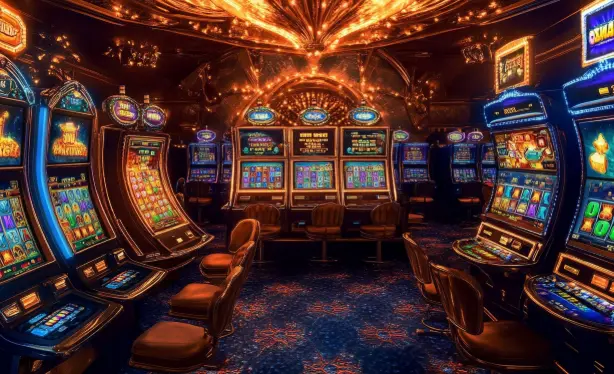
Black Hawk Casino Real Money: The Colorado Historic Gaming Town Truth
Black Hawk doesn't run on nostalgia; it runs on a brutally efficient real-money gaming engine crammed into a mile-high canyon. If you think this Colorado historic gaming town is just slot machines in old brick buildings, you are dangerously wrong. The real money mechanics here are tighter, faster, and more regulated than most Vegas floors, and the hardware sitting behind those cabinets tells a story the brochures never will. 🎰

The RTP Reality Nobody Prints on the Signage
Walk into any Black Hawk casino and the first thing a sharp player audits is the payout configuration, not the carpet. Colorado gaming law caps certain bet limits, but the return-to-player percentages on these machines get tuned by floor managers who know exactly how to balance hold against traffic. The Black Hawk Casino Real Money experience is not a coin-flip fantasy — it is a calculated math battlefield where every cabinet's firmware profile determines whether you leave with a bankroll or a story.
I have pulled apart slot logic boards in this town, and the variance settings on high-denomination units are not accidental. Operators here push volatility because the foot traffic from Denver guarantees a fresh supply of players every weekend. That is the cold mechanism: volume replaces luck, and the house never needs a hot streak to win. 💀

Historic Town, Modern Surveillance Architecture
The Colorado historic gaming town label is charming until you notice the ceiling. Black Hawk is wired with camera arrays and RFID chip tracking that would make a federal facility jealous. Every table hand, every cash-out, every suspicious pattern gets logged in real time. This is not paranoia — it is the compliance backbone that lets real-money gaming operate legally in a town of fewer than two hundred residents.
The slot machines are networked to central servers that monitor coin-in and payout rates continuously. If a cabinet drifts outside its approved RTP window, the system flags it before a single player notices. That level of oversight is why the gaming town survives politically, and why the hardware insiders respect the setup even while they exploit its edges.
Where the Real Edge Lives for Players
Smart money in Black Hawk does not chase jackpots. It hunts the promotional multiplier windows and the table games where dealer-dependent rules shift the house advantage by fractions of a percent. The Colorado Historic Gaming Town in USA reputation draws tourists, but the locals know which properties tighten their blackjack rules after midnight and which ones leave the side-bet payouts loose during weekday afternoons.
Cash-out speed is another silent weapon. Some properties process real-money withdrawals through digital wallets in under an hour, while others bury you in paperwork designed to cool your enthusiasm. The difference between a profitable session and a frustrating one often comes down to which cage you trust with your ticket.
The Firmware Gap That Changes Everything
Here is the part the industry hates discussing: not all cabinets in this town run identical firmware builds. Older units in the historic district carry legacy payout tables that a trained eye can spot within three spins. The newer server-based terminals are tighter, faster, and far less forgiving. A player who cannot tell the difference is donating to the floor without knowing it. 🔧
Audit the machine before you audit your luck. Check the payout schedule, watch the spin cadence, and read the denomination panel like a technical document. Black Hawk rewards the player who treats real-money gaming as a hardware problem, not a hope problem. The math does not care about your feelings, and neither does the firmware.
Every coin-in event feeds a data pipeline that recalibrates the floor in real time, and the operators adjust bet limits on a weekly cycle based on hold percentages that never appear on any public display. That is the final number that matters: the invisible dial turning behind the glass.