
Caribbean Stud Bahamas: What Is the Jackpot?
The jackpot in Caribbean Stud poker is not a myth, not a slot-style pipe dream, and definitely not some decorative number flashing on a casino marquee. It is a separate side bet with its own probability engine, its own house edge, and its own brutal mathematical reality. In the Bahamas, where casino floors operate under a different regulatory pulse than Las Vegas or Macau, this jackpot structure has evolved into something that rewards a very specific type of player — or punishes the ignorant with surgical precision.
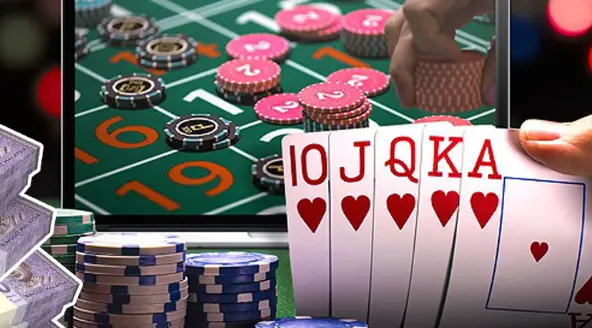
The Core Mechanism: Five-Card Hand Rankings Against a Fixed Payout Table
Strip away the neon and the free drinks. The Caribbean Stud jackpot is triggered when your five-card hand hits a specific premium ranking while the dealer fails to qualify or qualifies with a lesser hand. In most Bahamian casinos — Atlantis, Baha Mar, and the smaller rooms on Grand Bahama — the jackpot pay table typically starts at a flush and climbs through full house, four of a kind, straight flush, and royal flush. The royal flush is the headline act, often paying 100% of the meter or a capped amount like $100,000 or $250,000 depending on the property.
Here is the part the brochures never tell you: the jackpot side bet is not tied to the main ante. You must place a separate $1 or $5 wager before the deal. That wager goes into a progressive pool or a fixed-payout structure. In the Bahamas, many casinos run a hybrid model — a seeded jackpot that grows with every qualifying side bet, but with a maximum liability cap written into the internal audit logs. That cap is the first thing any sharp player should ask about. If the cap is $50,000 and the meter reads $80,000, you are playing for a phantom number.

The Real Odds: Why the Jackpot Is a Sucker's Bet Until It Isn't
Let's get granular. The probability of being dealt a royal flush in five cards is 1 in 649,740. The probability of a straight flush is roughly 1 in 72,193. A four of a kind? About 1 in 4,165. These are not numbers that care about your lucky shirt or your gut feeling. The side bet carries a house edge that can range from 15% to over 25% depending on the pay table configuration. That is not a typo. Compare that to the main game's house edge of roughly 5.22% with optimal strategy, and you start to see why the jackpot is a separate beast entirely.
But here is where the Bahamas gets interesting. Some properties — particularly those catering to high-roller international traffic — run a Caribbean Stud Bahamas jackpot with a must-hit-by provision. That means the meter must pay out before it reaches a certain threshold, often $250,000 or $500,000. When the meter climbs past 85% of that threshold, the expected value on the side bet can briefly flip positive. That window is narrow. It might last a few hours. It might last a few days. And the moment it flips, the sharks descend.
Hardware and Audit Trails: How the Meter Actually Works
The progressive meter is not a random number generator in the cloud. It is a physical or virtual counter fed by the casino management system — IGT, Aristocrat, or a proprietary Bahamian platform. Every side bet wager increments the meter by a fixed percentage, usually 70% to 85% of the dollar amount. The remaining 15% to 30% is the casino's cut, skimmed before the money ever hits the display. That skim is the hidden tax.
Now, the vulnerability audit angle: meters have been known to freeze, reset improperly after a power cycle, or pay out the wrong tier due to firmware version mismatches. In the Bahamas, gaming control agents are supposed to verify the meter's EPROM or digital ledger monthly. But enforcement varies. If you are playing a Caribbean Stud Bahamas jackpot, ask the pit boss when the last audit stamp was logged. If they hesitate, walk away. A meter without a recent audit is a meter that might not pay.
Payout Structures and the Dealer Qualification Trap
Here is the twist that breaks most players: in Caribbean Stud, the dealer must qualify with Ace-King or better for your main bet to pay even money. But the jackpot side bet? It often pays regardless of dealer qualification, as long as your hand meets the minimum ranking. That sounds generous until you realize the pay table is calibrated so that the side bet's house edge absorbs that generosity with room to spare.
Typical Bahamian jackpot pay tables look like this: flush pays 50 to 1, full house 100 to 1, four of a kind 500 to 1, straight flush 10% of the meter, royal flush 100% of the meter. Some properties add a five-card royal flush bonus that pays an additional fixed amount on top of the meter. That is the only scenario where the side bet approaches fair value. And even then, the variance is stomach-churning. You could play 200,000 hands and never see a royal.
The Bahamas Edge: Regulatory Quirks and Player Leverage
Bahamian casino regulations require that progressive jackpot meters be bonded or insured. That means the money is theoretically there. But "theoretically" is doing heavy lifting in that sentence. The insurance policy might cover only the seeded amount, not the full meter. Always confirm whether the jackpot is self-funded by the casino or underwritten by a third party. If it is underwritten, the payout timeline can stretch into weeks while paperwork clears.
The smart play? Treat the Caribbean Stud jackpot as entertainment, not an investment. The only time it becomes mathematically interesting is when the meter exceeds the must-hit threshold minus the remaining expected cost to trigger it. That calculation requires knowing the exact number of side bet wagers per hour, the increment rate, and the current meter value. If you cannot get those three numbers from the pit, you are guessing. And guessing in a casino is just donating with extra steps. 💀